
Knowing your protein target takes about thirty seconds. Ask any fitness resource and you'll get roughly 1.6–2.2g per kilogram of bodyweight for someone training consistently. Write it down. Done. That part's easy.
Hitting it every day is the hard part, not because the number is complicated, but because protein has more friction attached to it than any other macro. It requires planning. It is the most expensive macronutrient. And it is the one that is easiest to lose track of when breakfast was rushed and lunch was whatever was nearest.
Why protein specifically needs defending
Carbs and fat arrive in your diet without much effort. Bread, pasta, rice, oils, cheese, snacks: they are everywhere, cheap, and convenient. Protein sources mostly require cooking or deliberate selection. You have to go looking for them. If you do not, you will end the day heavily undershooting your target and trying to rescue it at dinner, which is both unpleasant and inefficient.
The rescue-at-dinner pattern is probably the most common protein failure mode. You arrive at 7pm with 100g still to hit, your appetite is erratic from eating lightly all day, and dinner becomes either a joyless slab of plain chicken or a quietly missed target. Distributing protein earlier in the day prevents all of this.
How much protein is actually in common foods
These are approximate values per 100g cooked weight (except eggs, which are listed per unit). Exact amounts vary by cut, brand, and preparation; treat these as useful working estimates:
| Food | Approx. protein |
|---|---|
| Chicken breast (cooked) | ~31g per 100g |
| Lean beef (cooked) | ~27g per 100g |
| Canned tuna (drained) | ~26g per 100g |
| Salmon (cooked) | ~25g per 100g |
| Eggs | ~6g each (~13g per 100g) |
| Greek yogurt (plain, full fat) | ~10g per 100g (~17g per 170g serving) |
| Cottage cheese | ~11g per 100g |
| Tofu (firm) | ~9g per 100g |
| Edamame (cooked) | ~11g per 100g |
| Lentils (cooked) | ~9g per 100g |
| Canned chickpeas | ~7g per 100g |
Notice the gap between top-tier animal sources and plant sources. Plant proteins are genuinely useful for hitting a protein target; you just need more volume to get there, and they typically carry more carbohydrate alongside them. Neither is a problem, just worth knowing when you're planning.
A worked example: 150g across a real day
150g/day is a reasonable target for someone weighing around 75kg who's training regularly. Here's one way it can come apart across a real day. No meal prep required:
| Meal | What | Approx. protein |
|---|---|---|
| Breakfast | 3 scrambled eggs + 170g Greek yogurt | ~18g + ~17g = ~35g |
| Lunch | 150g cooked chicken breast in a salad or wrap | ~47g |
| Afternoon snack | 200g cottage cheese | ~22g |
| Dinner | 150g cooked salmon + 100g edamame | ~38g + ~11g = ~49g |
| Total | ~153g |
All four meals are achievable without meal prep. Breakfast and the snack take under five minutes each. Dinner is two items that can be cooked in parallel. The protein total clears 150g with a small buffer. And the day doesn't look like a bodybuilder's food log; it looks like meals.
The anchor principle: protein first, everything else second
Pick the protein source for each meal before you decide anything else. "What's for lunch?" is a harder question than "What's the protein for lunch, and what goes around it?"
This sounds like a trivial reframe. The behavioral difference is real. Protein-first planning consistently produces higher daily intakes without dramatically different meals. You're not eating new foods; you're starting from a different anchor point. Once the protein is decided, the rest of the plate fills in naturally: a grain, a vegetable, whatever's available. The anchor prevents the pattern of landing on a carb-heavy default and then trying to add protein as an afterthought.
When you're behind at midday
Open your tracking app at noon and you're 40g short of where you should be. That's recoverable without drama. In order of least effort:
- Add a protein-forward snack before your next meal: Greek yogurt (~17g), two hard-boiled eggs (~12g), a small tin of fish (~20–25g), or 200g cottage cheese (~22g) each cover a meaningful portion of the gap.
- Upgrade your next meal's anchor: add a tin of tuna to a salad, throw an extra egg on toast, choose the protein option at the cafeteria instead of the carb-heavy one.
- Split the deficit across two remaining eating moments. 20g at a snack and 20g at dinner is much easier on appetite and digestion than trying to hit 40g extra at one meal.
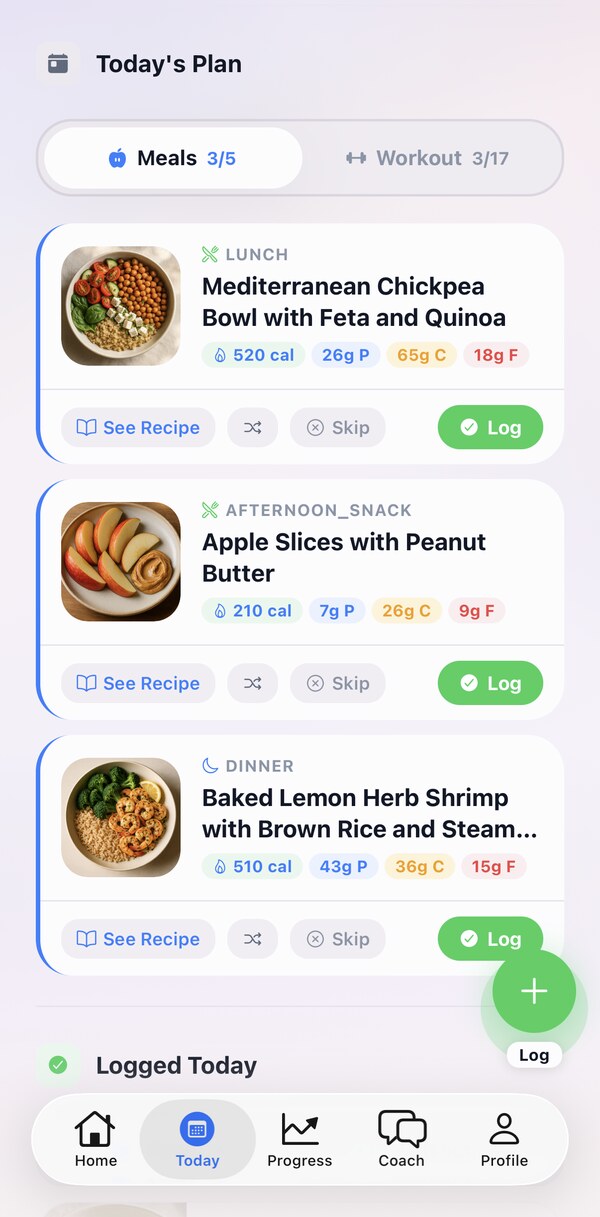
WorkoutPal's AI coach can look at where you are midday and suggest a specific swap or addition. It sees your remaining meals for the day and proposes something that closes the gap without blowing your calorie budget.
Flexibility keeps the target alive week over week
A plan that requires one specific meal every Tuesday gets abandoned on the Tuesday you don't have the ingredients or the appetite. That is not a willpower problem; it is a plan design problem.
The protein target you hit reliably is the one built around foods you enjoy and can access. Worth spending five minutes building a short personal list: three or four reliable breakfast proteins, two or three lunch anchors, a couple of snack options. When you know that list, you don't have to think hard about protein each day. You just reach for the familiar options.
WorkoutPal lets you swap any planned meal for one with equivalent protein and similar calories. The day rebalances so your target stays intact. Ask the coach to build a grocery list from your week's meals and you'll have the right inputs ready before you need them, which closes the "I don't have the ingredients" failure mode before it opens.
For tracking your macros quickly throughout the day, see how AI photo calorie counting works, including when to use photo vs. barcode vs. quick text logging.
Frequently asked questions
How do I hit my daily protein goal without tracking every meal?
Use the anchor principle: pick your protein source first and build the meal around it. Aim for roughly equal protein across three or four meals rather than rescuing your total at dinner. If you know five reliable protein sources you enjoy, you'll hit the target most days without obsessive logging.
What are the highest protein foods per 100g?
Cooked chicken breast (~31g/100g), lean beef (~27g/100g), canned tuna (~26g/100g), and cooked salmon (~25g/100g) lead the pack. Eggs are about 6g each (~13g/100g). Greek yogurt and cottage cheese sit around 10–11g/100g and are valuable for their convenience and volume.
How should I spread protein throughout the day?
Aim for three or four moderate hits rather than rescuing your total at dinner. A rough guide: 35–40g at breakfast, 40–50g at lunch, 15–20g from a snack, 40–50g at dinner. The exact split matters less than avoiding the pattern of almost nothing before 6pm and then a panicked dinner.
What if I'm 40–50g short on protein at dinner time?
Add a protein-focused snack in the afternoon first, then build a protein-forward dinner. Greek yogurt, two eggs, cottage cheese, or a tin of fish each covers 15–22g. Most 40–50g shortfalls close comfortably with one snack plus a normal dinner.
How WorkoutPal makes the protein target automatic
All of the tactics above come down to one habit: knowing how much protein you have left and choosing the next meal to close the gap. Doing that math in your head all day is the part people give up on. WorkoutPal does it for you.
Set your goal and it sets a daily protein target, then tracks every meal against it as you log by photo, barcode, recipe, or text. At 2pm it can tell you that you are forty grams short, and the AI coach will suggest a higher-protein dinner or swap your planned meal for one that fits, rebalancing the rest of the day so calories still line up. Need to shop for it? Ask the coach to build a grocery list around your targets. The result is that hitting protein stops being a running calculation and becomes a plan you just follow.
A complete plan, built around your food, for free
A protein target only works if it fits how you actually eat. When you set up WorkoutPal you answer a few questions about your goal, lifestyle, and food preferences, and in about a minute it builds a complete, personalized meal and workout plan around them, with realistic protein targets and meals you would actually choose.
It is completely free to use, with no paywall. You do not unlock macro tracking, meal swaps, or the AI coach by subscribing; they are there from the first minute, which is what makes hitting your protein goal every single day realistic rather than aspirational.
Hit your protein goal meal by meal
WorkoutPal plans meals around your protein target, suggests swaps when you need them, and builds your grocery list. Free on iPhone.
Download free on the App Store